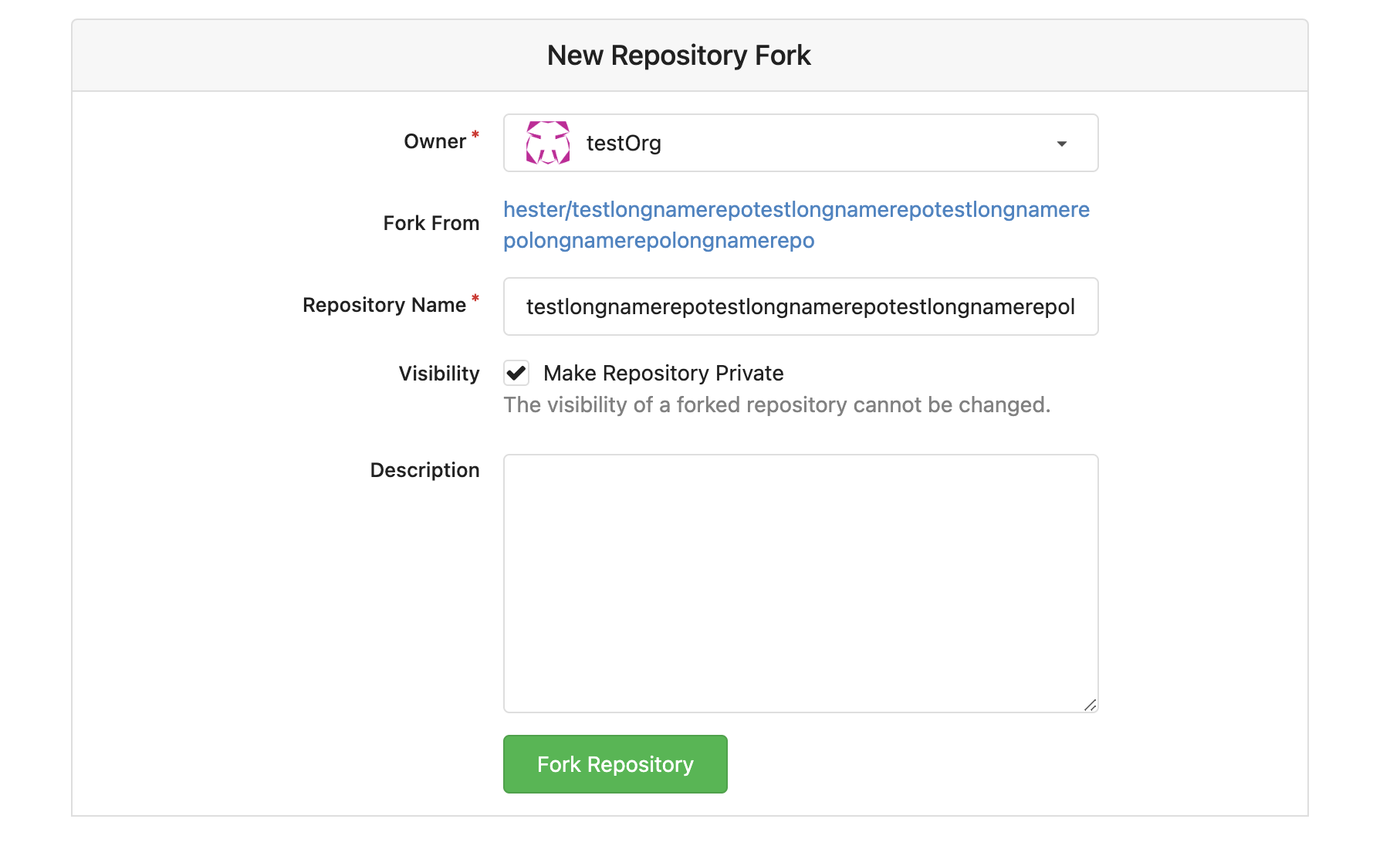
Fairly new to Forgejo but I just ran into this when trying to create a couple repositories.
I noticed that the input field for the repository name in several areas of the UI is prone to have annoying auto-capitalization, spellchecking and other browser features which try to correct the user input.

I as a user would like to not have the browser interfere with my input especially in dialogs where I want to have something "custom".
For fields where the repo name is used to validate an action (Danger Zone) this is even more frustrating.

So, to me, this is a quality of live improvement fix.

I checked the docs for these three attributes and none of them seem to have a negative side effect for the user:

1. https://developer.mozilla.org/en-US/docs/Web/HTML/Reference/Global_attributes/autocorrect
2. https://developer.mozilla.org/en-US/docs/Web/HTML/Reference/Global_attributes/autocapitalize
3. https://developer.mozilla.org/en-US/docs/Web/HTML/Reference/Global_attributes/spellcheck

## List of URLs where this applies:
1. `/repo/migrate`
2. `/repo/create`
3. `/<user>/<repo slug>/settings`
4. In general things in the "Danger zone" section where the repo name is used to validate the action
5. …

Reviewed-on: https://codeberg.org/forgejo/forgejo/pulls/12506
Reviewed-by: 0ko <0ko@noreply.codeberg.org>
Reviewed-by: Beowulf <beowulf@beocode.eu>
Replace the anti-CSRF token with a [cross origin protection by Go](https://go.dev/doc/go1.25#nethttppkgnethttp) that uses a stateless way of verifying if a request was cross origin or not. This allows is to remove al lot of code and replace it with a few lines of code and we no longer have to hand roll this protection. The new protection uses indicators by the browser itself that indicate if the request is cross-origin, thus we no longer have to take care of ensuring the generated CSRF token is passed back to the server any request by the the browser will have send this indicator.
Resolvesforgejo/forgejo#3538
Reviewed-on: https://codeberg.org/forgejo/forgejo/pulls/9830
Reviewed-by: oliverpool <oliverpool@noreply.codeberg.org>
Reviewed-by: Mathieu Fenniak <mfenniak@noreply.codeberg.org>
Co-authored-by: Gusted <postmaster@gusted.xyz>
Co-committed-by: Gusted <postmaster@gusted.xyz>
To avoid duplicated load of the same data in an HTTP request, we can set
a context cache to do that. i.e. Some pages may load a user from a
database with the same id in different areas on the same page. But the
code is hidden in two different deep logic. How should we share the
user? As a result of this PR, now if both entry functions accept
`context.Context` as the first parameter and we just need to refactor
`GetUserByID` to reuse the user from the context cache. Then it will not
be loaded twice on an HTTP request.

But of course, sometimes we would like to reload an object from the
database, that's why `RemoveContextData` is also exposed.

The core context cache is here. It defines a new context
```go
type cacheContext struct {
	ctx  context.Context
	data map[any]map[any]any
        lock sync.RWMutex
}

var cacheContextKey = struct{}{}

func WithCacheContext(ctx context.Context) context.Context {
	return context.WithValue(ctx, cacheContextKey, &cacheContext{
		ctx:  ctx,
		data: make(map[any]map[any]any),
	})
}
```

Then you can use the below 4 methods to read/write/del the data within
the same context.

```go
func GetContextData(ctx context.Context, tp, key any) any
func SetContextData(ctx context.Context, tp, key, value any)
func RemoveContextData(ctx context.Context, tp, key any)
func GetWithContextCache[T any](ctx context.Context, cacheGroupKey string, cacheTargetID any, f func() (T, error)) (T, error)
```

Then let's take a look at how `system.GetString` implement it.

```go
func GetSetting(ctx context.Context, key string) (string, error) {
	return cache.GetWithContextCache(ctx, contextCacheKey, key, func() (string, error) {
		return cache.GetString(genSettingCacheKey(key), func() (string, error) {
			res, err := GetSettingNoCache(ctx, key)
			if err != nil {
				return "", err
			}
			return res.SettingValue, nil
		})
	})
}
```

First, it will check if context data include the setting object with the
key. If not, it will query from the global cache which may be memory or
a Redis cache. If not, it will get the object from the database. In the
end, if the object gets from the global cache or database, it will be
set into the context cache.

An object stored in the context cache will only be destroyed after the
context disappeared.
If user has reached the maximum limit of repositories:

- Before
  - disallow create
  - allow fork without limit
- This patch:
  - disallow create
  - disallow fork
- Add option `ALLOW_FORK_WITHOUT_MAXIMUM_LIMIT` (Default **true**) :
enable this allow user fork repositories without maximum number limit

fixed https://github.com/go-gitea/gitea/issues/21847

Signed-off-by: Xinyu Zhou <i@sourcehut.net>
* Refactor `i18n` to `locale`

- Currently we're using the `i18n` variable naming for the `locale`
struct. This contains locale's specific information and cannot be used
for general i18n purpose, therefore refactoring it to `locale` makes
more sense.
- Ref: https://github.com/go-gitea/gitea/pull/20096#discussion_r906699200

* Update routers/install/install.go
There are multiple places where Gitea does not properly escape URLs that it is building and there are multiple places where it builds urls when there is already a simpler function available to use this.

This is an extensive PR attempting to fix these issues.

1. The first commit in this PR looks through all href, src and links in the Gitea codebase and has attempted to catch all the places where there is potentially incomplete escaping.
2. Whilst doing this we will prefer to use functions that create URLs over recreating them by hand.
3. All uses of strings should be directly escaped - even if they are not currently expected to contain escaping characters. The main benefit to doing this will be that we can consider relaxing the constraints on user names and reponames in future.
4. The next commit looks at escaping in the wiki and re-considers the urls that are used there. Using the improved escaping here wiki files containing '/'. (This implementation will currently still place all of the wiki files the root directory of the repo but this would not be difficult to change.)
5. The title generation in feeds is now properly escaped.
6. EscapePound is no longer needed - urls should be PathEscaped / QueryEscaped as necessary but then re-escaped with Escape when creating html with locales Signed-off-by: Andrew Thornton <art27@cantab.net>

Signed-off-by: Andrew Thornton <art27@cantab.net>
* Fix truncated organization names

Previous ellipsis implementation hid vertical overflow - image + descent line of letters.
Organization visibility in select on dashboard was not always visible.
This commit extracts classes which don't make collisions with other items on page.
* Direct avatar rendering

This adds new template helpers for avatar rendering which output image
elements with direct links to avatars which makes them cacheable by the
browsers.

This should be a major performance improvment for pages with many avatars.

* fix avatars of other user's profile pages

* fix top border on user avatar name

* uncircle avatars

* remove old incomplete avatar selector

* use title attribute for name and add it back on blame

* minor refactor

* tweak comments

* fix url path join and adjust test to new result

* dedupe functions
* Add class to page content to unify top margin

Previously pages would individually set this margin but some didn't so
content would stick to the header without any space. Resolve this by
adding a new class that is added on all pages. The only place where we
remove this margin again is on the pages with menu or wrapper in the
header.

* fix admin notices

* fix team pages

* fix loading segment on gitgraph for arc-green

* fix last missing case

Co-authored-by: techknowlogick <techknowlogick@gitea.io>
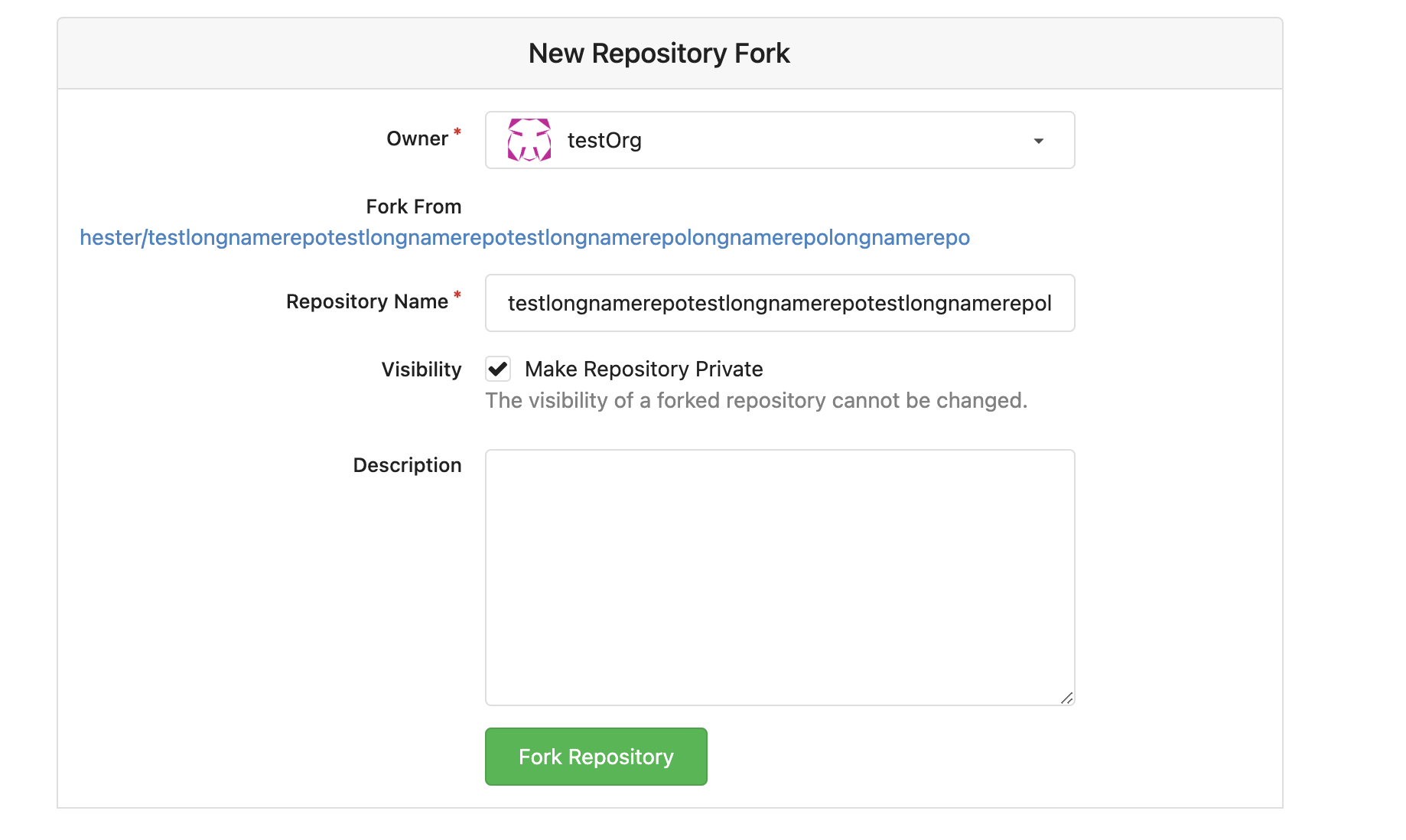
* Fix so that user can still fork his own repository to his organizations

* Fix to only use owned organizations

* Add integration test for forking own repository to owned organization
This commit improves templates readability, since all of them use consistent
indent with all template command blocks indented too.

1. Indents both HTML containers such as <div>, <p> and Go HTML template blocks
   such as {{if}} {{with}}

2. Cleans all trailing white-space

3. Adds trailing last line-break to each file