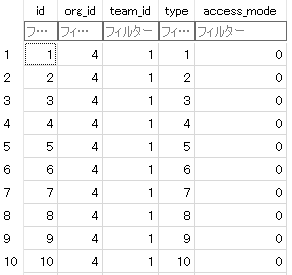
- Delete blocked users entries.
- Organization cannot get blocked, it can block other people however.
- Delete following entries.
- Organization cannot follow, it can be followed by users.
- Resolvesforgejo/forgejo#11416
Reviewed-on: https://codeberg.org/forgejo/forgejo/pulls/11699
Reviewed-by: Mathieu Fenniak <mfenniak@noreply.codeberg.org>
Reviewed-by: 0ko <0ko@noreply.codeberg.org>
Reviewed-by: Andreas Ahlenstorf <aahlenst@noreply.codeberg.org>
Co-authored-by: Gusted <postmaster@gusted.xyz>
Co-committed-by: Gusted <postmaster@gusted.xyz>
Currently:
- In the database, `NULL` is used in `action_runner_token.owner_id` & `.repo_id` to represent an absent value, as required by the foreign key
- In the code, `0` is used in `ActionRunnerToken.OwnerID` and `.RepoID` to represent an absent value

This PR replaces the `int64` fields with `optional.Option[int64]` which allows a single data type to be used for both cases, and removes the usage of the value `0` as a placeholder.

This change has a limited scope -- although `ActionRunnerToken` uses `NULL` values in the database, the related table `ActionRunner` still uses zero-values for `OwnerID` and `RepoID`.  This means a lot of code interacting with both of these tables still uses `0` values, such as the UI.  The changes here were stopped at a reasonable point to avoid cascading into all places that use the `ActionRunner` table.  (I'll continue this work in the future to enable foreign keys on `ActionRunner`, but likely after #11516 is completed to avoid serious conflict resolution problems.)

## Checklist

The [contributor guide](https://forgejo.org/docs/next/contributor/) contains information that will be helpful to first time contributors. There also are a few [conditions for merging Pull Requests in Forgejo repositories](https://codeberg.org/forgejo/governance/src/branch/main/PullRequestsAgreement.md). You are also welcome to join the [Forgejo development chatroom](https://matrix.to/#/#forgejo-development:matrix.org).

### Tests for Go changes

(can be removed for JavaScript changes)

- I added test coverage for Go changes...
  - [x] in their respective `*_test.go` for unit tests.
  - [ ] in the `tests/integration` directory if it involves interactions with a live Forgejo server.
- I ran...
  - [x] `make pr-go` before pushing

### Documentation

- [ ] I created a pull request [to the documentation](https://codeberg.org/forgejo/docs) to explain to Forgejo users how to use this change.
- [x] I did not document these changes and I do not expect someone else to do it.

### Release notes

- [ ] This change will be noticed by a Forgejo user or admin (feature, bug fix, performance, etc.). I suggest to include a release note for this change.
- [x] This change is not visible to a Forgejo user or admin (refactor, dependency upgrade, etc.). I think there is no need to add a release note for this change.

Reviewed-on: https://codeberg.org/forgejo/forgejo/pulls/11601
Reviewed-by: Gusted <gusted@noreply.codeberg.org>
Co-authored-by: Mathieu Fenniak <mathieu@fenniak.net>
Co-committed-by: Mathieu Fenniak <mathieu@fenniak.net>
A [safeguard][0] was added to ensure a team member is not an organization. A [discussion][1] concluded that remote users should not yet be allowed to be team members, at least until it is implemented (by F3 or ActivityPub).

As [gof3 v3.11.25][2] has support for [teams][3], remote users need to be added as an eligible team member, otherwise compliance tests for the Forgejo internal driver [implementation][4] fail.

The IsUserByID function is renamed to IsAnEligibleTeamMemberByID to clarify its purpose. The TestIsUserConsistency is removed because the IsUser function is used in [an entirely different context][5] and there is no reason to ensure both are consistent. A unit test is added for IsAnEligibleTeamMemberByID as a replacement and also verifies organizations are not considered eligible.

[0]: https://codeberg.org/forgejo/forgejo/pulls/9757
[1]: https://codeberg.org/forgejo/forgejo/pulls/9757#issuecomment-7802255
[2]: https://code.forgejo.org/f3/gof3/releases/tag/v3.11.25
[3]: https://code.forgejo.org/f3/gof3/pulls/484/files
[4]: 9c565a9b37 (diff-241521b6eb)
[5]: b66a76686d/routers/api/v1/api.go (L299-L308)

Reviewed-on: https://codeberg.org/forgejo/forgejo/pulls/11326
Reviewed-by: Gusted <gusted@noreply.codeberg.org>
Co-authored-by: limiting-factor <limiting-factor@posteo.com>
Co-committed-by: limiting-factor <limiting-factor@posteo.com>
This PR fixes a number of typos throughout the entire repository. Running https://github.com/crate-ci/typos and then changing all occurrences that I naively deemed "safe enough".

Reviewed-on: https://codeberg.org/forgejo/forgejo/pulls/10753
Reviewed-by: Gusted <gusted@noreply.codeberg.org>
Co-authored-by: Christoph Mewes <christoph@kubermatic.com>
Co-committed-by: Christoph Mewes <christoph@kubermatic.com>
Resolves#4167
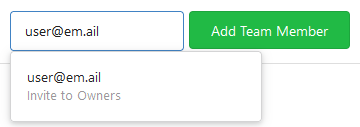
Changes it to check that the user being added is `User` or `Bot` type before allowing it
Reviewed-on: https://codeberg.org/forgejo/forgejo/pulls/9757
Reviewed-by: Gusted <gusted@noreply.codeberg.org>
Co-authored-by: Cyborus <cyborus@cyborus.xyz>
Co-committed-by: Cyborus <cyborus@cyborus.xyz>
- Add links to review request targets in issue comments
- Fix links to ghost users/orgs/teams to be empty

Reviewed-on: https://codeberg.org/forgejo/forgejo/pulls/8239
Reviewed-by: Gusted <gusted@noreply.codeberg.org>
Co-authored-by: Robert Wolff <mahlzahn@posteo.de>
Co-committed-by: Robert Wolff <mahlzahn@posteo.de>
- Unify the usage of [`crypto/rand.Read`](https://pkg.go.dev/crypto/rand#Read) to `util.CryptoRandomBytes`.
- Refactor `util.CryptoRandomBytes` to never return an error. It is documented by Go, https://go.dev/issue/66821, to always succeed. So if we still receive a error or if the returned bytes read is not equal to the expected bytes to be read we panic (just to be on the safe side).
- This simplifies a lot of code to no longer care about error handling.

Reviewed-on: https://codeberg.org/forgejo/forgejo/pulls/7453
Reviewed-by: Earl Warren <earl-warren@noreply.codeberg.org>
Co-authored-by: Gusted <postmaster@gusted.xyz>
Co-committed-by: Gusted <postmaster@gusted.xyz>
- If a organisation is set to be limited visible, then it will still be
visible for signed-in users. However `UnitPermission` didn't take this
into account, it does now.
- Add unit test.
- Resolves#6141
Reimplement GetUserOrgsList and also move some functions and test to
org_list file.

---------

Co-authored-by: Zettat123 <zettat123@gmail.com>
(cherry picked from commit b4abb6deff14b741c7666d7579e0eea68443306c)

Conflicts:
	models/organization/org_test.go
	services/oauth2_provider/access_token.go
  trivial conflicts due to codeblocks moving to different files
Refactoring of #32211

this move the PublicOnly() filter calcuation next to the DB querys and
let it be decided by the Doer

---
*Sponsored by Kithara Software GmbH*

(cherry picked from commit 43c252dfeaf9ab03c4db3e7ac5169bc0d69901ac)

Conflicts:
	models/organization/org_test.go
	models/organization/org_user_test.go
	routers/web/org/home.go

  rather simple conflict resolution but not trivial
  tests/integration/user_count_test.go had to be adapted (simple)
  because it does not exist in Gitea and uses the modified model
Fix#30378
(cherry picked from commit 0fe9f93eb4c94d55e43b18b9c3cc6d513a34c0b5)
Conflicts:
- models/organization/org.go
- services/repository/delete.go
- services/user/delete.go
In all three cases, conflicts were resolved by manually adding
the lines added by the Gitea patch, keeping the Forgejo code
surrounding them.
This PR adds `setting.Service.DefaultOrgMemberVisible` value to dataset
of user when the initial org creator is being added to the created org.
Fixes#30012.
(cherry picked from commit e3e08dcc5184cdbdac5023fabaafba123a995c3e)
`KeyID` is never set.

(cherry picked from commit 155269fa586c41a268530c3bb56349e68e6761d7)

Conflicts:
	models/user/email_address.go
	trivial context conflict
Part of #27065

This reduces the usage of `db.DefaultContext`. I think I've got enough
files for the first PR. When this is merged, I will continue working on
this.

Considering how many files this PR affect, I hope it won't take to long
to merge, so I don't end up in the merge conflict hell.

---------

Co-authored-by: wxiaoguang <wxiaoguang@gmail.com>
Fixes https://github.com/go-gitea/gitea/issues/22676

Context Data `IsOrganizationMember` and `IsOrganizationOwner` is used to
control the visibility of `people` and `team` tab.

2871ea0809/templates/org/menu.tmpl (L19-L40)

And because of the reuse of user projects page, User Context is changed
to Organization Context. But the value of `IsOrganizationMember` and
`IsOrganizationOwner` are not being given.

I reused func `HandleOrgAssignment` to add them to the ctx, but may have
some unnecessary variables, idk whether it is ok.

I found there is a missing `PageIsViewProjects` at create project page.
To avoid duplicated load of the same data in an HTTP request, we can set
a context cache to do that. i.e. Some pages may load a user from a
database with the same id in different areas on the same page. But the
code is hidden in two different deep logic. How should we share the
user? As a result of this PR, now if both entry functions accept
`context.Context` as the first parameter and we just need to refactor
`GetUserByID` to reuse the user from the context cache. Then it will not
be loaded twice on an HTTP request.

But of course, sometimes we would like to reload an object from the
database, that's why `RemoveContextData` is also exposed.

The core context cache is here. It defines a new context
```go
type cacheContext struct {
	ctx  context.Context
	data map[any]map[any]any
        lock sync.RWMutex
}

var cacheContextKey = struct{}{}

func WithCacheContext(ctx context.Context) context.Context {
	return context.WithValue(ctx, cacheContextKey, &cacheContext{
		ctx:  ctx,
		data: make(map[any]map[any]any),
	})
}
```

Then you can use the below 4 methods to read/write/del the data within
the same context.

```go
func GetContextData(ctx context.Context, tp, key any) any
func SetContextData(ctx context.Context, tp, key, value any)
func RemoveContextData(ctx context.Context, tp, key any)
func GetWithContextCache[T any](ctx context.Context, cacheGroupKey string, cacheTargetID any, f func() (T, error)) (T, error)
```

Then let's take a look at how `system.GetString` implement it.

```go
func GetSetting(ctx context.Context, key string) (string, error) {
	return cache.GetWithContextCache(ctx, contextCacheKey, key, func() (string, error) {
		return cache.GetString(genSettingCacheKey(key), func() (string, error) {
			res, err := GetSettingNoCache(ctx, key)
			if err != nil {
				return "", err
			}
			return res.SettingValue, nil
		})
	})
}
```

First, it will check if context data include the setting object with the
key. If not, it will query from the global cache which may be memory or
a Redis cache. If not, it will get the object from the database. In the
end, if the object gets from the global cache or database, it will be
set into the context cache.

An object stored in the context cache will only be destroyed after the
context disappeared.
Fixes#19555
Test-Instructions:
https://github.com/go-gitea/gitea/pull/21441#issuecomment-1419438000
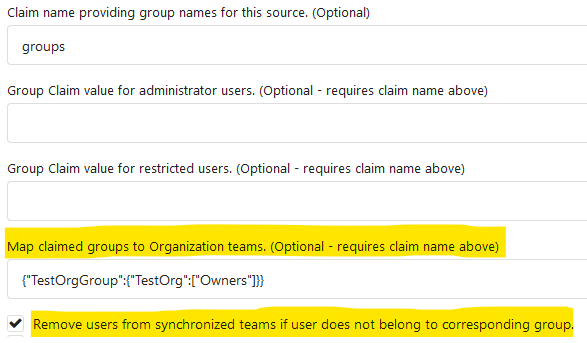
This PR implements the mapping of user groups provided by OIDC providers
to orgs teams in Gitea. The main part is a refactoring of the existing
LDAP code to make it usable from different providers.
Refactorings:
- Moved the router auth code from module to service because of import
cycles
- Changed some model methods to take a `Context` parameter
- Moved the mapping code from LDAP to a common location
I've tested it with Keycloak but other providers should work too. The
JSON mapping format is the same as for LDAP.
---------
Co-authored-by: Lunny Xiao <xiaolunwen@gmail.com>
- Currently the function `GetUsersWhoCanCreateOrgRepo` uses a query that
is able to have duplicated users in the result, this is can happen under
the condition that a user is in team that either is the owner team or
has permission to create organization repositories.
- Add test code to simulate the above condition for user 3,
[`TestGetUsersWhoCanCreateOrgRepo`](a1fcb1cfb8/models/organization/org_test.go (L435))
is the test function that tests for this.
- The fix is quite trivial use a map keyed by user id in order to drop
duplicates.

---------

Co-authored-by: Lunny Xiao <xiaolunwen@gmail.com>
Change all license headers to comply with REUSE specification.
Fix#16132
Co-authored-by: flynnnnnnnnnn <flynnnnnnnnnn@github>
Co-authored-by: John Olheiser <john.olheiser@gmail.com>
Fix#19513
This PR introduce a new db method `InTransaction(context.Context)`,
and also builtin check on `db.TxContext` and `db.WithTx`.
There is also a new method `db.AutoTx` has been introduced but could be used by other PRs.
`WithTx` will always open a new transaction, if a transaction exist in context, return an error.
`AutoTx` will try to open a new transaction if no transaction exist in context.
That means it will always enter a transaction if there is no error.
Co-authored-by: delvh <dev.lh@web.de>
Co-authored-by: 6543 <6543@obermui.de>
A lot of our code is repeatedly testing if individual errors are
specific types of Not Exist errors. This is repetitative and unnecesary.
`Unwrap() error` provides a common way of labelling an error as a
NotExist error and we can/should use this.

This PR has chosen to use the common `io/fs` errors e.g.
`fs.ErrNotExist` for our errors. This is in some ways not completely
correct as these are not filesystem errors but it seems like a
reasonable thing to do and would allow us to simplify a lot of our code
to `errors.Is(err, fs.ErrNotExist)` instead of
`package.IsErr...NotExist(err)`

I am open to suggestions to use a different base error - perhaps
`models/db.ErrNotExist` if that would be felt to be better.


Signed-off-by: Andrew Thornton <art27@cantab.net>
Co-authored-by: delvh <dev.lh@web.de>