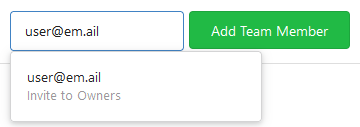
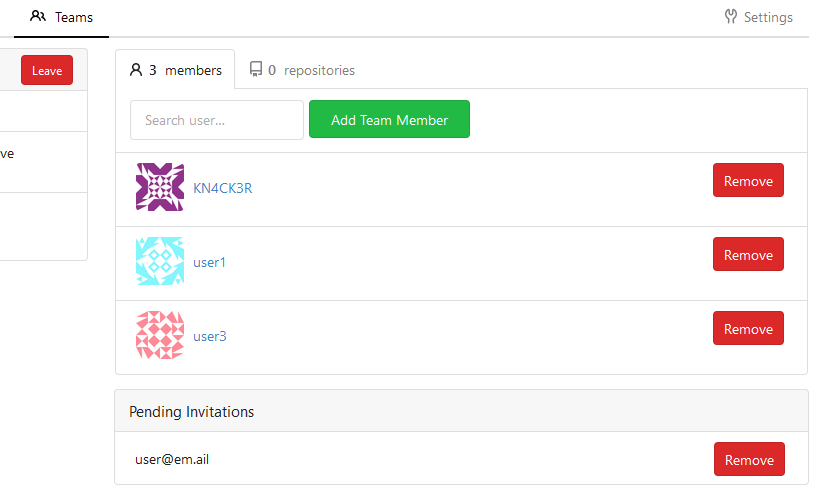
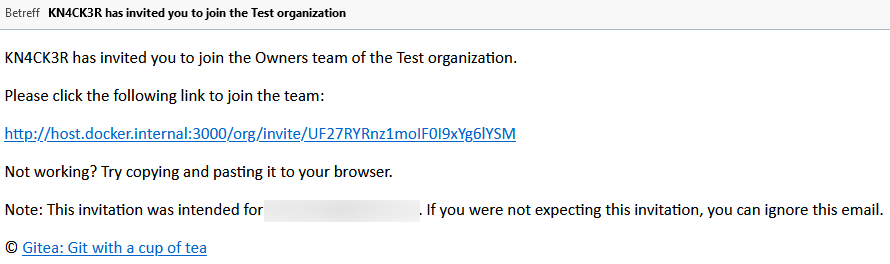
This fixes#12119 while simplifying the page a bit.
It also drops dependency on `/web_src/css/modules/card.css` module. Only the profile page still relies on it.
As an observation, I find the text "Please click the button below..." quite inadequate as web copy, but I decided to keep it as-is in this pull request.
In the `org.css` changes, I also removed references to two `.organization.invite #invite-box` selectors, since I couldn't find it anywhere in the source code.
Screenshot:

## Checklist
The [contributor guide](https://forgejo.org/docs/next/contributor/) contains information that will be helpful to first time contributors. All work and communication must conform to Forgejo's [AI Agreement](https://codeberg.org/forgejo/governance/src/branch/main/AIAgreement.md). There also are a few [conditions for merging Pull Requests in Forgejo repositories](https://codeberg.org/forgejo/governance/src/branch/main/PullRequestsAgreement.md). You are also welcome to join the [Forgejo development chatroom](https://matrix.to/#/#forgejo-development:matrix.org).
### Tests for Go changes
(can be removed for JavaScript changes)
- I added test coverage for Go changes...
- [ ] in their respective `*_test.go` for unit tests.
- [x] in the `tests/integration` directory if it involves interactions with a live Forgejo server.
- I ran...
- [ ] `make pr-go` before pushing
### Tests for JavaScript changes
(can be removed for Go changes)
- I added test coverage for JavaScript changes...
- [ ] in `web_src/js/*.test.js` if it can be unit tested.
- [ ] in `tests/e2e/*.test.e2e.js` if it requires interactions with a live Forgejo server (see also the [developer guide for JavaScript testing](https://codeberg.org/forgejo/forgejo/src/branch/forgejo/tests/e2e/README.md#end-to-end-tests)).
### Documentation
- [ ] I created a pull request [to the documentation](https://codeberg.org/forgejo/docs) to explain to Forgejo users how to use this change.
- [x] I did not document these changes and I do not expect someone else to do it.
### Release notes
- [ ] This change will be noticed by a Forgejo user or admin (feature, bug fix, performance, etc.). I suggest to include a release note for this change.
- [x] This change is not visible to a Forgejo user or admin (refactor, dependency upgrade, etc.). I think there is no need to add a release note for this change.
*The decision if the pull request will be shown in the release notes is up to the mergers / release team.*
The content of the `release-notes/<pull request number>.md` file will serve as the basis for the release notes. If the file does not exist, the title of the pull request will be used instead.
Reviewed-on: https://codeberg.org/forgejo/forgejo/pulls/12580
Reviewed-by: Antonin Delpeuch <wetneb@noreply.codeberg.org>
Replace the anti-CSRF token with a [cross origin protection by Go](https://go.dev/doc/go1.25#nethttppkgnethttp) that uses a stateless way of verifying if a request was cross origin or not. This allows is to remove al lot of code and replace it with a few lines of code and we no longer have to hand roll this protection. The new protection uses indicators by the browser itself that indicate if the request is cross-origin, thus we no longer have to take care of ensuring the generated CSRF token is passed back to the server any request by the the browser will have send this indicator.
Resolvesforgejo/forgejo#3538
Reviewed-on: https://codeberg.org/forgejo/forgejo/pulls/9830
Reviewed-by: oliverpool <oliverpool@noreply.codeberg.org>
Reviewed-by: Mathieu Fenniak <mfenniak@noreply.codeberg.org>
Co-authored-by: Gusted <postmaster@gusted.xyz>
Co-committed-by: Gusted <postmaster@gusted.xyz>
## Changes
- Fixes the case where a logged in user can accept an email invitation
even if their email address does not match the address in the invitation
To avoid duplicated load of the same data in an HTTP request, we can set
a context cache to do that. i.e. Some pages may load a user from a
database with the same id in different areas on the same page. But the
code is hidden in two different deep logic. How should we share the
user? As a result of this PR, now if both entry functions accept
`context.Context` as the first parameter and we just need to refactor
`GetUserByID` to reuse the user from the context cache. Then it will not
be loaded twice on an HTTP request.

But of course, sometimes we would like to reload an object from the
database, that's why `RemoveContextData` is also exposed.

The core context cache is here. It defines a new context
```go
type cacheContext struct {
	ctx  context.Context
	data map[any]map[any]any
        lock sync.RWMutex
}

var cacheContextKey = struct{}{}

func WithCacheContext(ctx context.Context) context.Context {
	return context.WithValue(ctx, cacheContextKey, &cacheContext{
		ctx:  ctx,
		data: make(map[any]map[any]any),
	})
}
```

Then you can use the below 4 methods to read/write/del the data within
the same context.

```go
func GetContextData(ctx context.Context, tp, key any) any
func SetContextData(ctx context.Context, tp, key, value any)
func RemoveContextData(ctx context.Context, tp, key any)
func GetWithContextCache[T any](ctx context.Context, cacheGroupKey string, cacheTargetID any, f func() (T, error)) (T, error)
```

Then let's take a look at how `system.GetString` implement it.

```go
func GetSetting(ctx context.Context, key string) (string, error) {
	return cache.GetWithContextCache(ctx, contextCacheKey, key, func() (string, error) {
		return cache.GetString(genSettingCacheKey(key), func() (string, error) {
			res, err := GetSettingNoCache(ctx, key)
			if err != nil {
				return "", err
			}
			return res.SettingValue, nil
		})
	})
}
```

First, it will check if context data include the setting object with the
key. If not, it will query from the global cache which may be memory or
a Redis cache. If not, it will get the object from the database. In the
end, if the object gets from the global cache or database, it will be
set into the context cache.

An object stored in the context cache will only be destroyed after the
context disappeared.